Ronda by car: the gorge, the bridge & two great mountain roads
A clifftop town split by a 100-metre gorge and stitched back together by the Puente Nuevo — reached by one of Andalusia's great mountain drives and far better with your own car than on a tour bus.
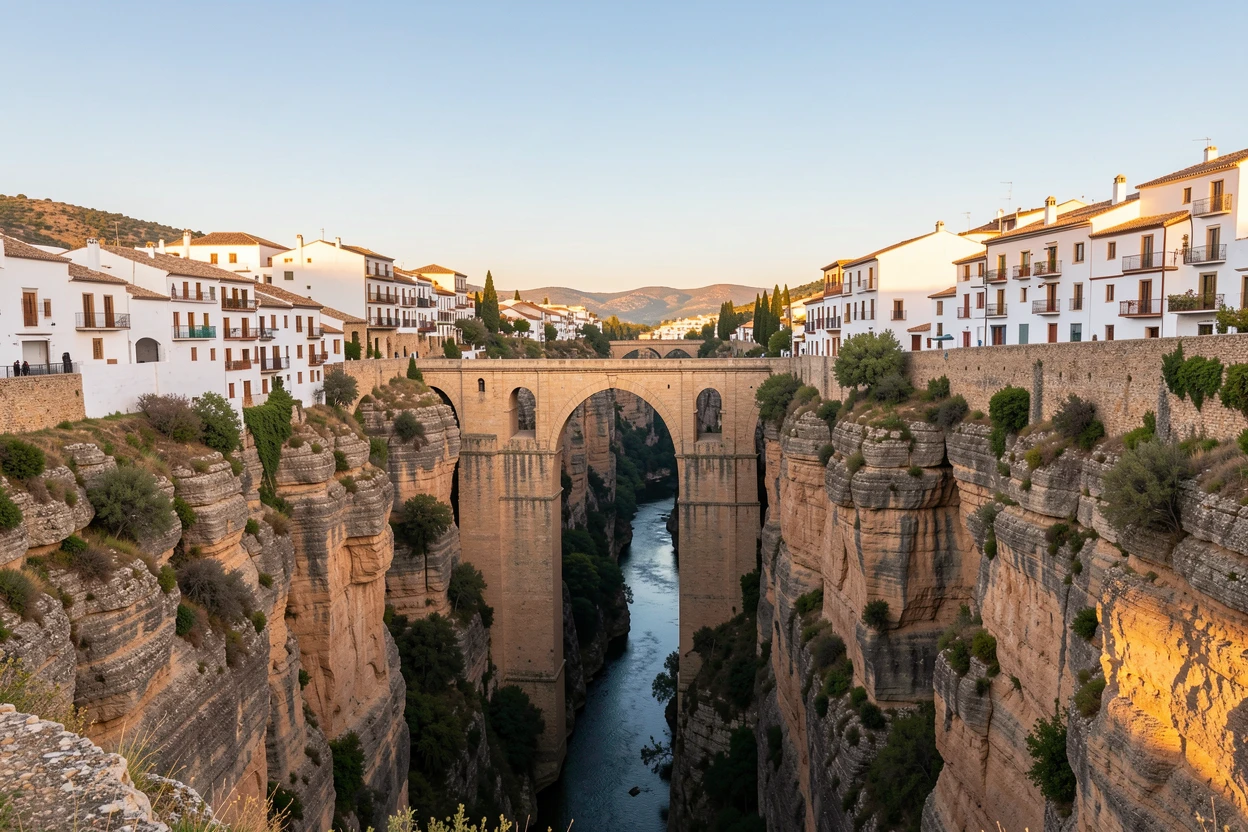
- The Puente Nuevo spanning the 100-metre El Tajo gorge
- The A-397 from San Pedro — one of Andalusia's classic mountain drives
- One of Spain's oldest bullrings and a walkable clifftop old town
- Gateway to Setenil de las Bodegas and the white villages
- Cooler mountain air — a year-round destination
Getting to Ronda by car: two very different roads
There are two classic approaches. From Marbella or San Pedro de Alcántara, the A-397 climbs about 49 km straight up into the Serranía de Ronda — a beautifully engineered mountain road with sweeping bends, long climbs and huge views back to the coast. Allow a good hour from San Pedro and don't rush it. From Málaga, the gentler option is the A-357 towards Campillos and then the A-367 via Ardales, rolling through farmland and hills for around an hour and three quarters in total. Many drivers make a loop of it: up one way, down the other. Both roads are free, well maintained and genuinely part of the day out — this is one trip where the drive itself is a highlight.
Where to park in Ronda
Ronda is refreshingly easy for a historic town. Aim for the newer part of town north of the gorge, where several public car parks sit within a few minutes' walk of Plaza del Socorro and the pedestrian shopping street. From there the bullring, the Puente Nuevo and the old town are all reachable on foot in about ten minutes. What you shouldn't do is drive across the bridge into La Ciudad, the old quarter: its lanes are narrow, confusing and largely reserved for residents. On busy weekends and public holidays arrive before late morning, when the day-trip crowds and their buses start to fill the town. There's no camera-enforced restricted-traffic zone to worry about here — the only real constraint is space on the busiest days.
The Puente Nuevo and the El Tajo gorge
Everything in Ronda revolves around the gorge. The El Tajo canyon drops around 100 metres below the town, and the 18th-century Puente Nuevo spans it in one audacious stack of stone arches. See it from the top first — the viewpoints beside the bridge and the terraces of the Alameda gardens hang right over the void. Then, if your legs allow, take the path down towards the Camino de los Molinos below the walls: the classic photograph of the bridge, with the town balanced on the cliff edge above it, is taken from underneath. Give yourself an hour or two and decent shoes.
What else to see in Ronda
The Plaza de Toros is one of the oldest bullrings in Spain and one of the most elegant, with a museum attached; even visitors with no interest in bullfighting tend to admire the architecture. Across the bridge, La Ciudad rewards slow wandering — palaces, churches and lookout points appear at the end of quiet lanes. Seek out the Casa del Rey Moro's gardens, the Mondragón palace with its Moorish courtyards, and the old Arab baths near the foot of the town, among the best preserved in Spain. Then do what the locals do: a long lunch, because mountain towns eat well.
Why a car beats the coach tour
Ronda is one of the most heavily coach-toured towns in Andalusia, and the buses set the rhythm: they arrive from the coast in late morning and leave by mid-afternoon. With your own car you simply invert it. Arrive before ten and you'll have the bridge viewpoints almost to yourself; stay past six and the town empties again, the light turns golden on the gorge, and dinner happens on quiet squares. A car also means you choose the scenic road in both directions and can stop at the viewpoints along the A-397 — something no tour schedule allows.
Best time of day and season
Ronda sits at over 700 metres, so it plays by mountain rules: noticeably cooler than the coast in summer, genuinely cold on winter evenings. That makes it a superb summer escape when the beaches swelter — but bring a layer for after sunset even in June. Spring and autumn are perfect, with clear air and green hills. Time of day matters more than season: early morning and the last two hours before sunset are when the gorge looks its best and the crowds are thinnest. If mist sits in the canyon at dawn, count yourself lucky — it burns off into one of the great views.
Combining Ronda with nearby stops
Ronda anchors a perfect white-villages day. Setenil de las Bodegas, half an hour north, is the famous village built into overhanging rock, and the road onwards loops towards Olvera or the Grazalema mountains if you want a full circuit. Heading back to the coast on the A-397 drops you into San Pedro and Marbella for a swim after the mountains — a satisfying contrast in a single day. Combining Ronda with Mijas works too if you start early: village first, mountains after. What doesn't work is squeezing Ronda and Granada into the same day; they sit in opposite directions and each deserves its own trip.
Rent a car for Ronda
Best explored by car. Compact automatic from €28/day — or pick any class.
Parking
Park in the car parks around the newer town near Plaza del Socorro and walk in — everything is 10 minutes on foot. Don't drive into the old-town lanes across the bridge; they're tight and largely for residents.
Nearest pickup
Málaga Airport — 95 km
Routes through Ronda
More places worth the drive
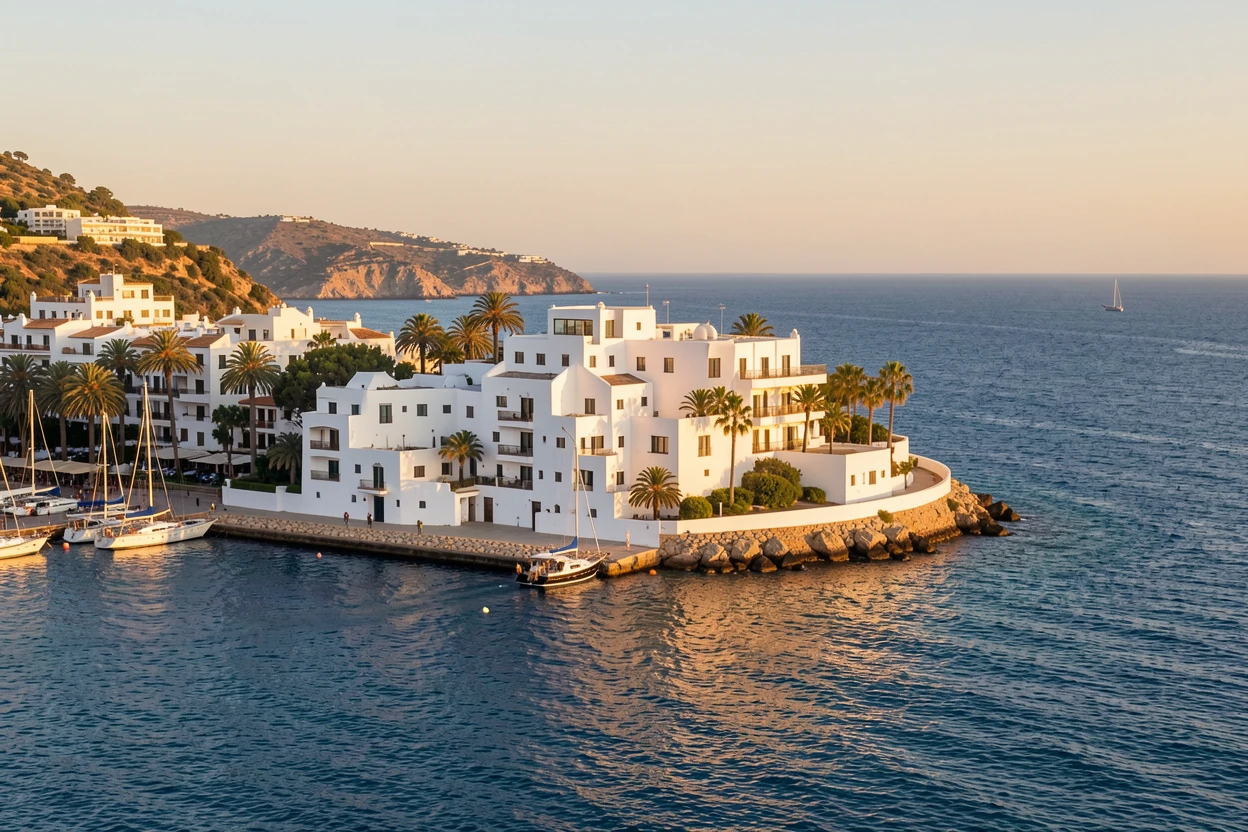
Three towns in one — a pretty pueblo, a busy beachfront and the playful Puerto Marina — plus a mountain cable car and a fairy-tale castle. A varied, family-friendly stop close to Málaga airport.
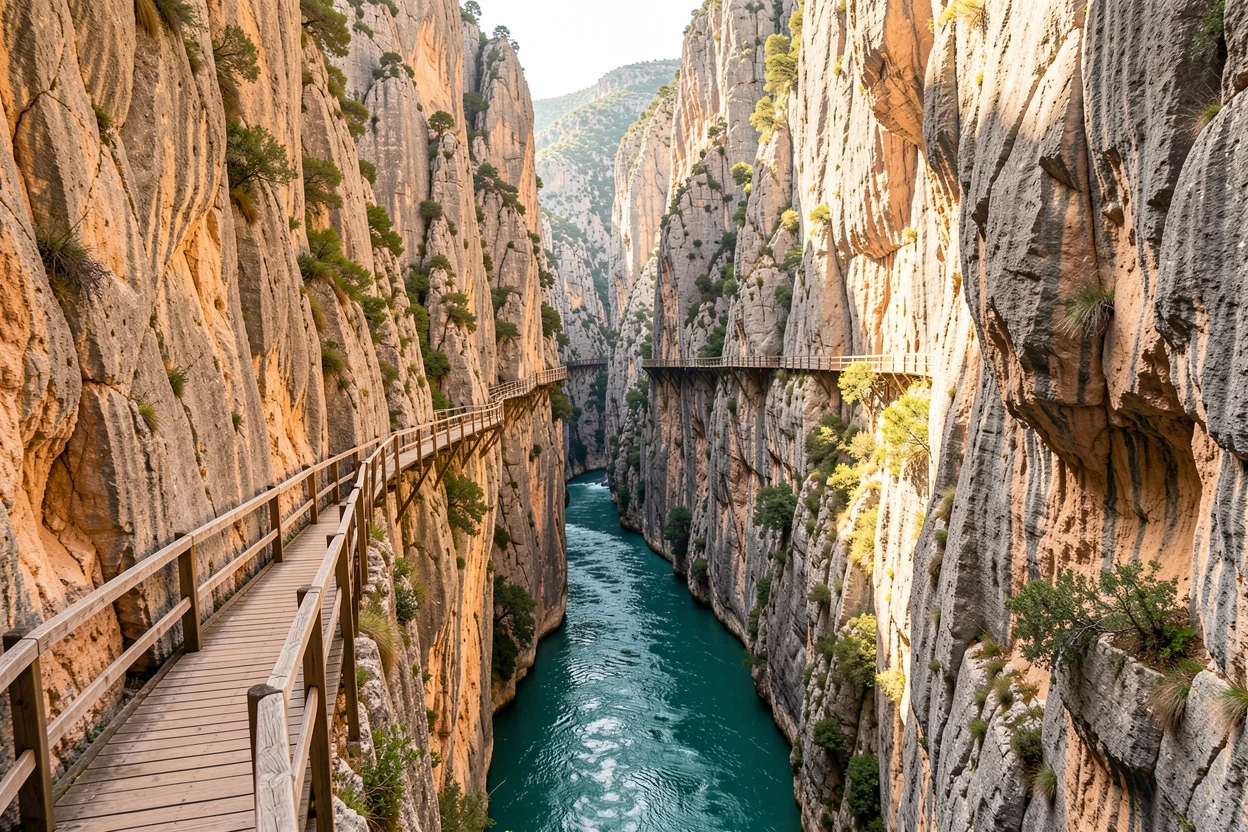
The famous cliff-hung walkway through the Gaitanes gorge is a one-way, two-entrance affair in the middle of nowhere — which makes a car by far the easiest way to do it, and turns the trip into a full lake-and-mountain day out.
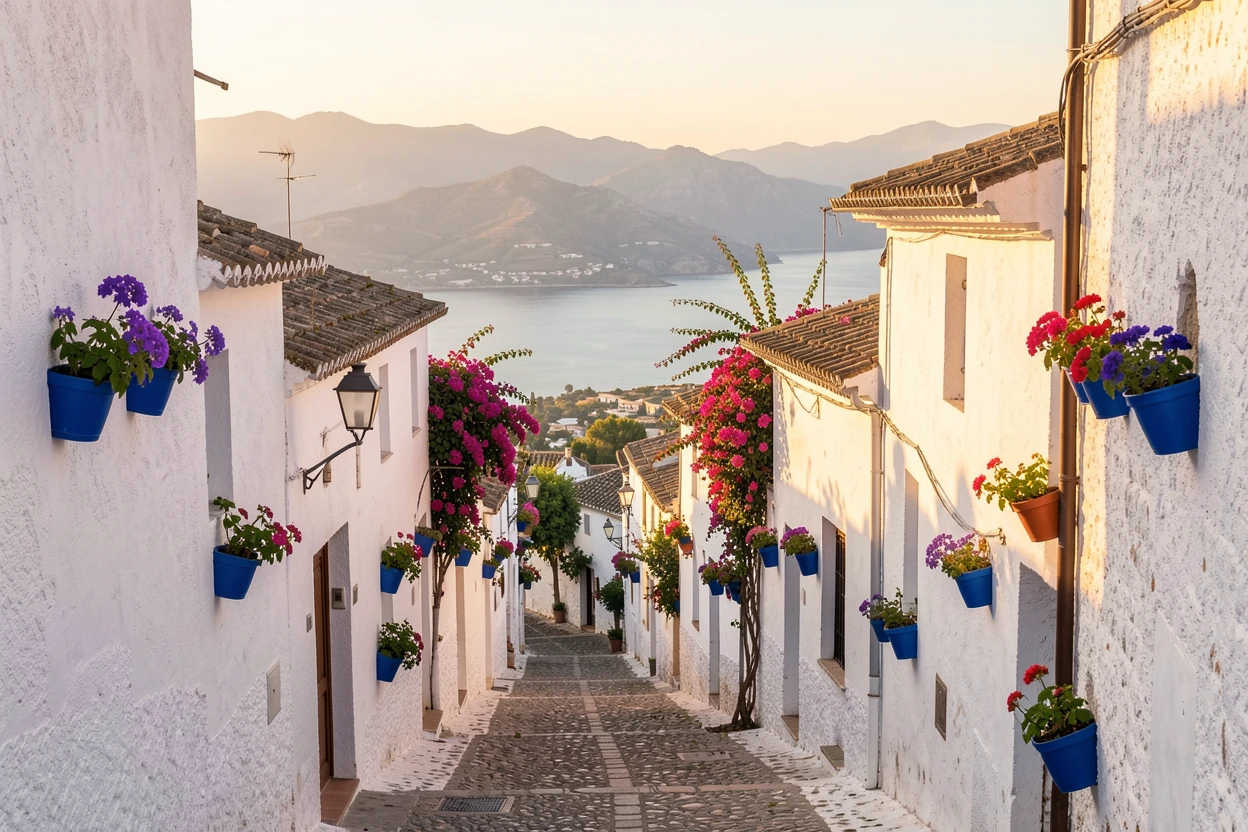
A cascade of whitewashed lanes above Nerja, regularly voted among Spain's most beautiful villages. The catch: it clings to a hillside with no through road — so arriving by car, early, at the right car park is half the visit.