
Best for this route
Volkswagen Golf or similar
Compact automatic
from
€28/day
5 2 automatic petrol
See details Compare class
Two slow days through the pueblos blancos north-west of Ronda: rock-roofed Setenil, castle-topped Olvera and lakeside Zahara. Park on the edges, walk into the centres.
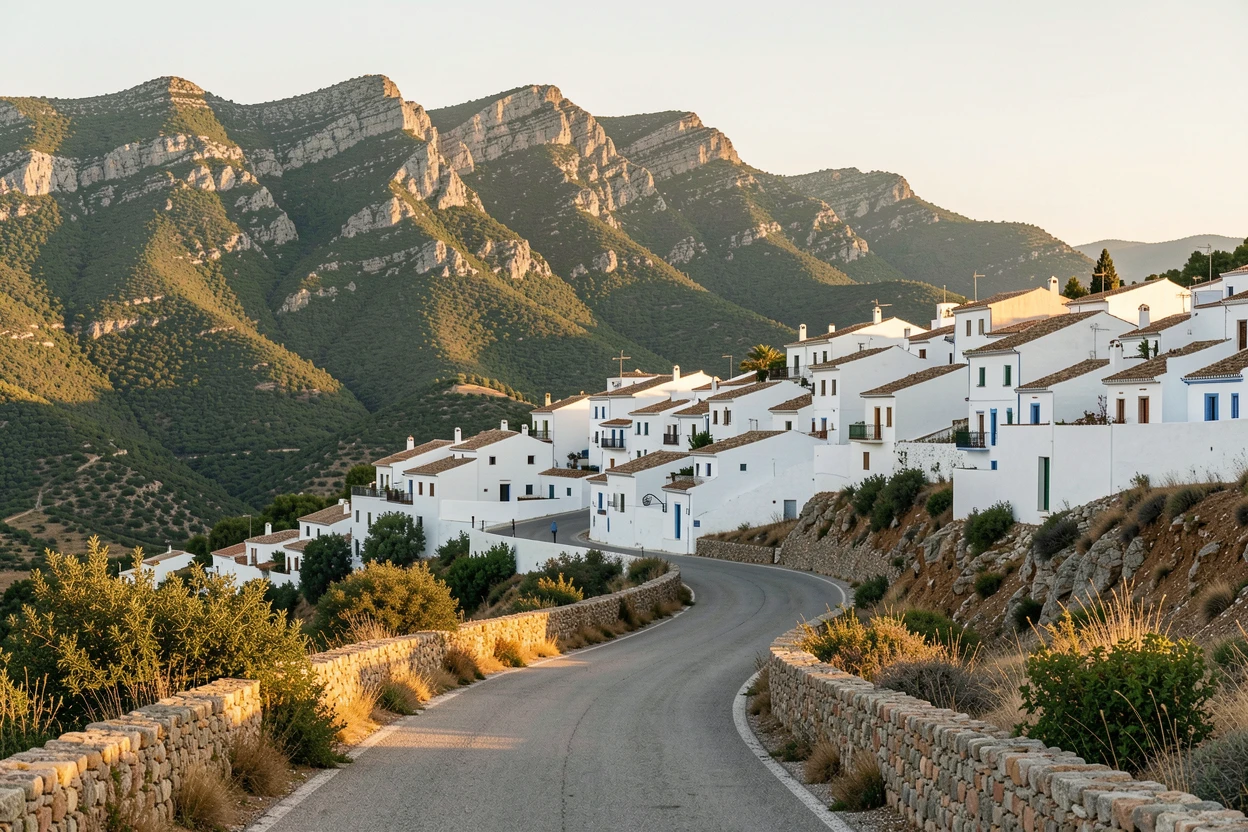
Leave Ronda after an early breakfast and head north across the plateau towards Setenil de las Bodegas, about half an hour away on minor roads such as the CA-4222 — narrow, quiet lanes winding between olive groves and wheat fields. Arrive as early as you can: the famous streets of Cuevas del Sol and Cuevas de la Sombra, where whole rows of houses sit beneath enormous rock overhangs carved by the Río Trejo, are at their photogenic best in soft morning light and fill up quickly from mid-morning onwards. Do not try to drive into the old centre; the final approach squeezes down to barely a single car's width, so park in the signed areas at the top of the village and walk down. Allow a couple of hours to wander the terraced lanes, climb to the upper viewpoints and linger over a coffee under the rock. From Setenil, continue north-west on the CA-9106 towards Olvera, whose Moorish castle and neighbouring church crown a limestone crag visible from kilometres away. The road rolls gently through one of the densest olive landscapes in Andalusia. In Olvera, park below the old town and climb on foot to the castle for a 360-degree panorama over the sierra, then stretch your legs on the Vía Verde de la Sierra, the old railway line turned walking and cycling route that begins here. Sleep in Olvera to enjoy the village once the day-trippers have gone.
Driving note: The last km into Setenil is too narrow for a SUV — park in the signed areas at the top of the village and walk down.
Give Olvera a last look from the castle terrace, then drive west towards Zahara de la Sierra, roughly forty minutes away via Algodonales. The approach is the most spectacular arrival of the trip: the village suddenly appears stacked against its crag beneath a 13th-century Moorish keep, with the turquoise Zahara-El Gastor reservoir spread out below. Pull into the signed viewpoints along the reservoir shore before you reach the village — the light on the water is best before midday, and in July and August you will want to do your walking early anyway, because the white streets reflect the heat fiercely by mid-afternoon. Park on the lower approach road at the edge of the village rather than attempting the steep, tight lanes near the church, then climb to the tower for a view that stretches across the whole Sierra de Grazalema. For the return to Ronda, drivers who enjoy mountain roads should take the CA-9104 over the Puerto de las Palomas towards Grazalema: a relentless ladder of hairpins climbing to over 1,100 metres, with a magnificent mirador at the pass where griffon vultures ride the thermals. Use a low gear both up and down, brake before the bends rather than in them, and give cyclists plenty of room. From Grazalema the A-372 runs east through cork-oak country back to Ronda, arriving as the evening light turns the Tajo gorge gold.
Driving note: The CA-9104 over the Puerto de las Palomas is a steep ladder of hairpins — use a low gear in both directions and avoid it in fog or after dark.
240 km total · 2 days
Mar–Nov
Medium