Frigiliana by car from Málaga: Spain's prettiest village, done right
A cascade of whitewashed lanes above Nerja, regularly voted among Spain's most beautiful villages. The catch: it clings to a hillside with no through road — so arriving by car, early, at the right car park is half the visit.
- The Barribarto: a perfectly preserved Moorish-Mudéjar quarter
- Cobbled lanes, blue-and-white houses and flowerpots on every wall
- Ceramic plaques telling the story of the 1569 Morisco rebellion
- Miel de caña — the last sugar-cane honey factory on the European mainland
- Viewpoints over the hills all the way down to the Mediterranean
- El Acebuchal, the restored lost hamlet, a short drive into the sierra
Getting there by car
Frigiliana hangs on a hillside 6 km above Nerja, and the drive is simple: take the A-7 east from Málaga for about 50 minutes, leave at the Nerja exit and follow signs up the MA-5105, which climbs inland through avocado and mango terraces. The final kilometres are twisty but wide and well surfaced — nothing a small automatic won't enjoy. From Marbella count on about an hour and a half via the A-7 past Málaga. There is no useful through road beyond the village, which is exactly why it stayed so intact: you come up, you park, you walk. A compact car is the right tool here; anything large only makes the entrance car parks harder work.
Where to park
Parking is the one thing to plan. All visitor parking sits at the village entrance along the main road — a multi-storey car park plus a handful of open pay lots — and everything beyond that point is stepped, pedestrian and dead-end. Do not let the navigation tempt you into the old town; more than one rental car has had to reverse down a staircase-width lane in front of an audience. In summer and on weekend lunchtimes the lots fill by late morning, so aim to arrive before eleven or after five. Out of season it is far more relaxed, but the rule never changes: park low, at the entrance, and give the village your feet.
The village: lanes, plaques and sugar-cane honey
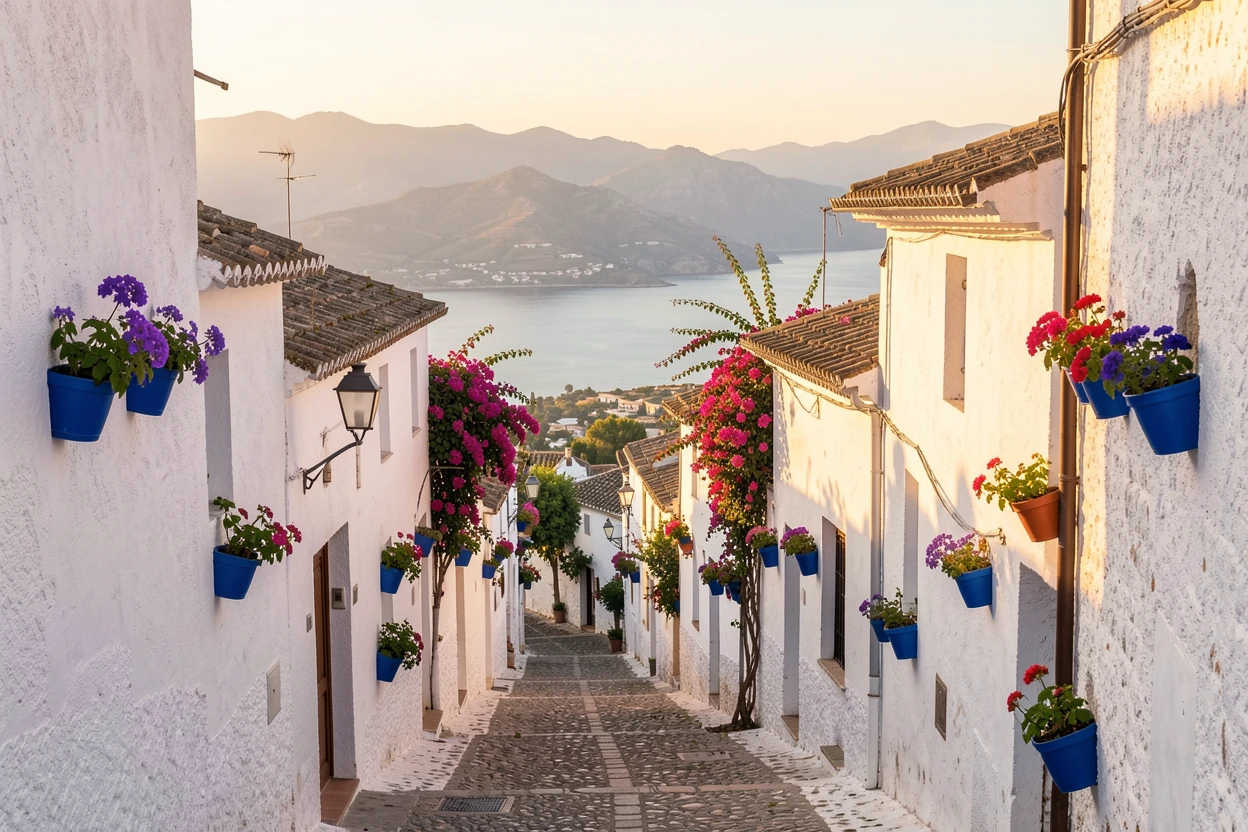
Frigiliana's old quarter, the Barribarto, is one of the best-preserved Moorish-Mudéjar streetscapes in Andalucía: steep cobbled lanes, blinding-white houses trimmed in blue, and geraniums erupting from every wall. Follow the twelve ceramic plaques set into the walls — they narrate the 1569 Morisco rebellion that ended on the crag above the village. Down by the main road, El Ingenio still boils sugar cane into miel de caña, the dark cane honey this coast is known for — the last factory of its kind on the European mainland — and every shop in the village sells a jar. Between the lanes, keep climbing: the upper streets end in viewpoints that run all the way down to the sea.
What the car unlocks
Day-trippers on the bus see the village; drivers get the sierra. A short signed drive into the hills brings you to El Acebuchal, the "lost village" abandoned in the 1940s and lovingly rebuilt — a whitewashed hamlet in a fold of the mountains with one famous restaurant and walking trails in every direction. The road past Frigiliana continues into the Sierras de Tejeda, Almijara y Alhama natural park, all pine gorges and raptors, and the wine village of Cómpeta makes a lovely onward loop along the mountain road. Back downhill, the caves of Nerja and the coves at Maro are ten minutes away — an easy same-day add-on that bus schedules simply can't do.
Best time to visit
Frigiliana works year-round — that is its quiet superpower — but timing shapes the day. Come early: at nine the lanes belong to delivery trolleys and cats, and the low light on the white walls is the photograph you came for. By noon in high season the village hums; by late afternoon it exhales again, and sunset from the upper viewpoints is glorious. Spring drapes the walls in flowers; late August brings the famous three-cultures festival, wonderful but heaving — arrive very early or stay away that weekend. Winter days are often clear and mild, with the sierra sharp behind the rooftops and the car parks blissfully empty.
Where to eat and drink
The village punches well above its size. Terraces along the upper lanes serve long lunches with the Mediterranean glinting far below — book or arrive early for the tables with the view. Menus leans local: goat in almond sauce, wines from the Axarquía hills, and miel de caña drizzled over fried aubergines, the signature plate of the area. For a coffee-and-pastry stop, the plazas by the church do fine; for a celebratory meal, the drive up to El Acebuchal has become a destination in itself. And take a jar of cane honey home — it is the souvenir that actually gets used.
Worth combining with
Frigiliana and Nerja are two halves of the same day: the Balcón de Europa, the Nerja caves and the Maro coves are all within fifteen minutes downhill, so do the village in the cool morning and the coast in the afternoon — or the reverse in winter. With more time, the mountain road east to Cómpeta strings together the Axarquía's white villages, and the A-7 puts Málaga city's museums under an hour away for the trip back. It also pairs naturally with a night in Nerja if you want the lanes to yourself after the last buses roll downhill.
Rent a car for Frigiliana
Best explored by car. Compact automatic from €28/day — or pick any class.
Parking
Park at the pay car parks at the village entrance — including the multi-storey by the main road — and walk in. Never attempt the old town: lanes are stepped, pedestrian and dead-end. Lots fill by late morning in season.
Nearest pickup
Málaga Airport — 60 km
More places worth the drive
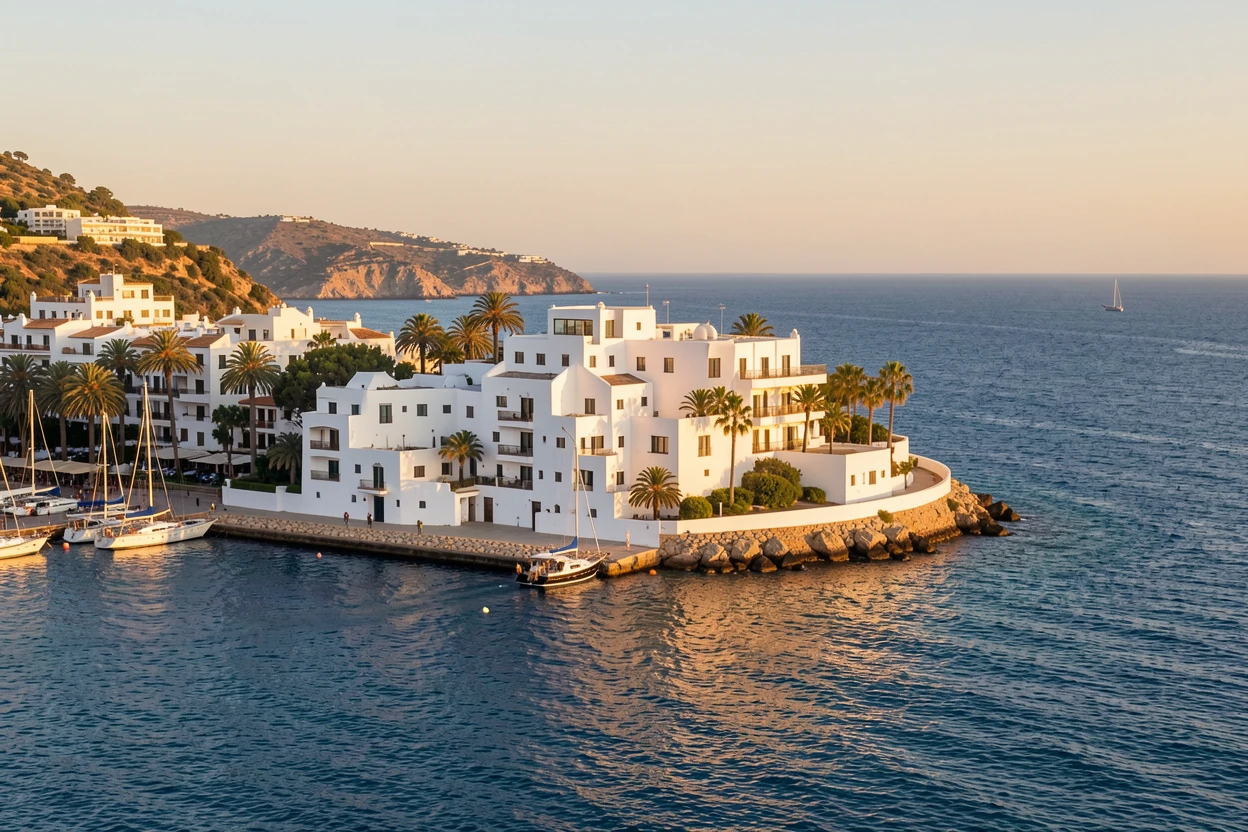
Three towns in one — a pretty pueblo, a busy beachfront and the playful Puerto Marina — plus a mountain cable car and a fairy-tale castle. A varied, family-friendly stop close to Málaga airport.
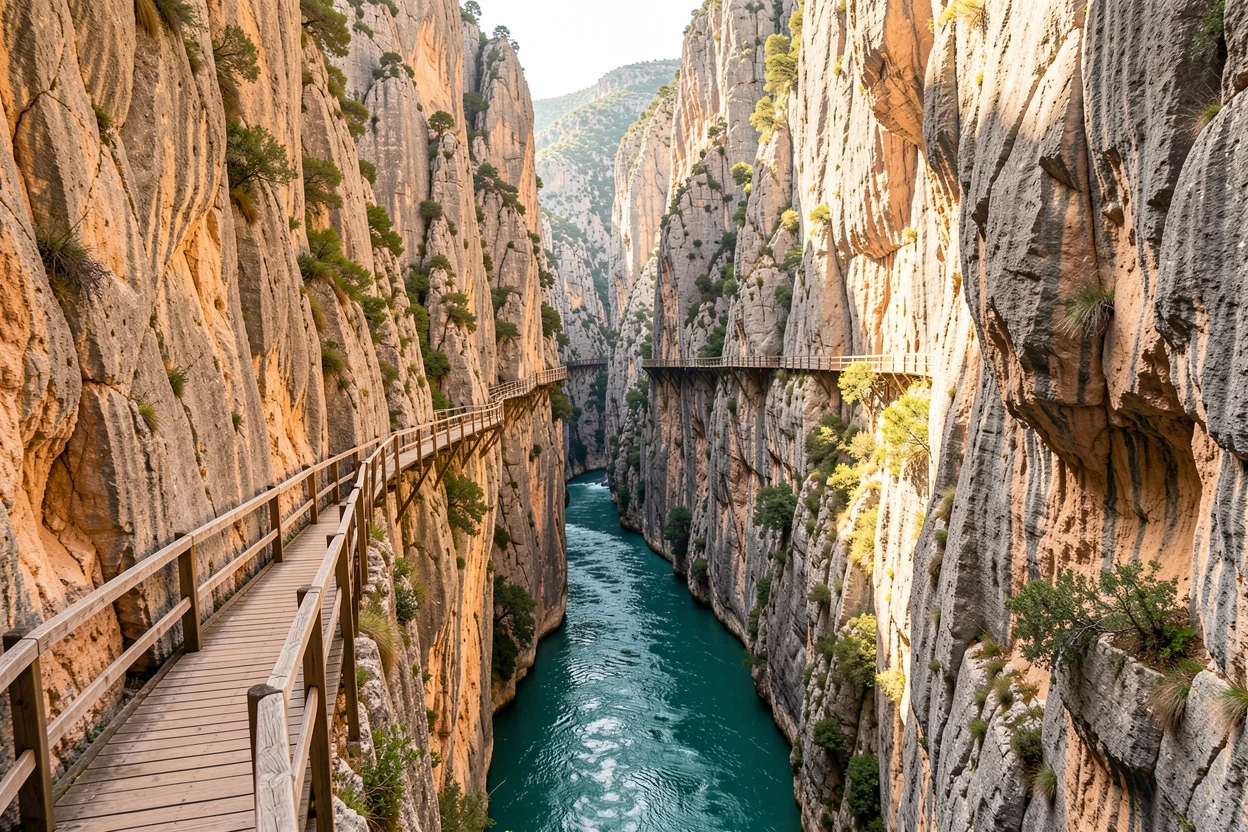
The famous cliff-hung walkway through the Gaitanes gorge is a one-way, two-entrance affair in the middle of nowhere — which makes a car by far the easiest way to do it, and turns the trip into a full lake-and-mountain day out.
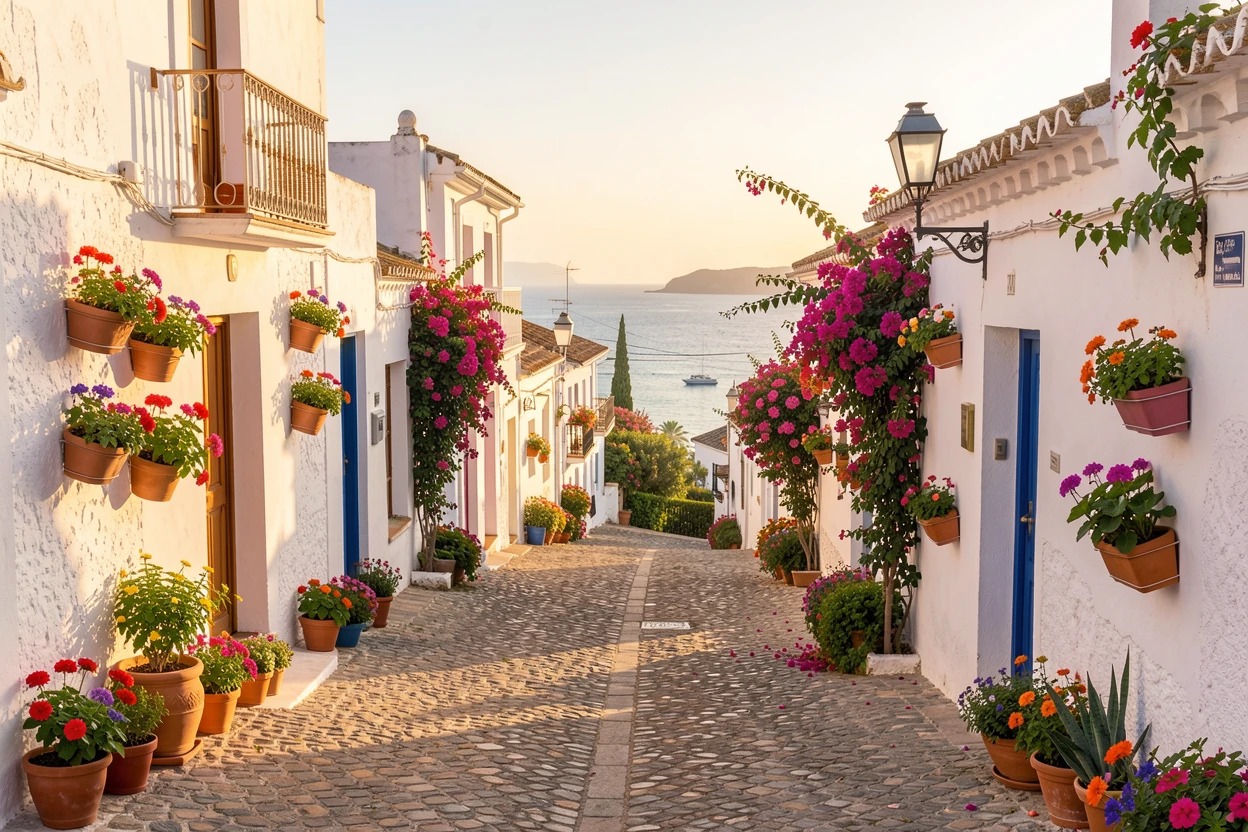
The 'Garden of the Costa del Sol' keeps a genuinely Spanish old town — flower-filled lanes, a famous mural route and an easy, walkable centre — west of Marbella with long, uncrowded beaches.