Córdoba by car: the Mezquita without the tour-bus timetable
The Mosque-Cathedral, a maze-like Jewish quarter and Andalucía's most famous patios — under two hours from Málaga on the A-45, and far more rewarding when you control your own arrival time.
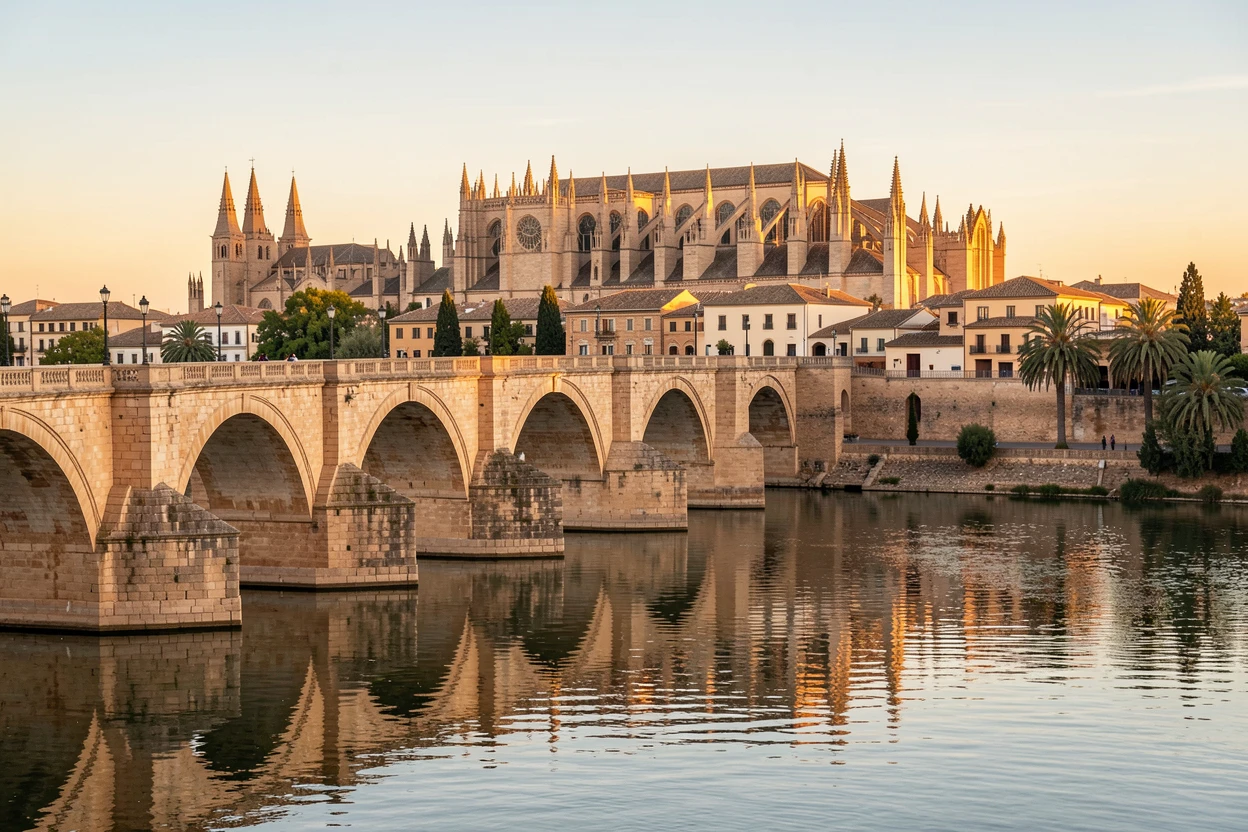
- The Mezquita-Catedral and its forest of striped arches
- The Judería: flower-hung lanes around the Calleja de las Flores
- The Roman bridge over the Guadalquivir at golden hour
- Medina Azahara, the ruined caliphal city — awkward without a car
- Patios and plazas that empty out once the day-trip buses leave
Getting to Córdoba by car
From Málaga the A-45 does all the work: around 165 km and about an hour and three quarters, climbing past Antequera and then rolling through olive country and the Montilla wine plains. From Marbella, take the A-7 towards Málaga and pick up the A-45 — count on roughly two and a half hours. It is an easy, well-surfaced motorway drive with plenty of service stations, and the freedom to leave at seven in the morning is exactly what a Córdoba day trip needs: you can be standing under the Mezquita's arches before the tour groups have finished their coffee. Arriving, follow signs for the centro histórico and aim directly for a car park — cruising for street parking near the old town is a game you will not win.
Where to park
Córdoba's historic centre is effectively a no-go area for visiting cars: the Judería's lanes are barely wider than a mirror, mostly one-way and access-restricted. The working solution is the ring of underground car parks around the old town — the riverside area near the Puerta del Puente and the Paseo de la Victoria side both leave you an easy ten-minute walk from the Mezquita. There is also free-ish surface parking across the river and along the Vial del Norte if you don't mind walking a bit further. Whatever you choose, park once and forget the car: everything you came for — Mezquita, Judería, Alcázar, Roman bridge — sits within one compact walkable circle.
The Mezquita and the old town
The Mezquita-Catedral is one of the buildings of Europe: a thousand-year-old forest of red-and-white striped arches with a Renaissance cathedral rising, improbably, from its middle. Give it a full morning and go early, when the light through the doors is at its best and the crowds at their thinnest. Around it spreads the Judería, the old Jewish quarter, whose whitewashed lanes and flower-hung patios reward aimless wandering — the Calleja de las Flores is the postcard shot. Walk the Roman bridge across the Guadalquivir for the classic view back at the old town, then take in the Alcázar de los Reyes Cristianos and its gardens, and the aristocratic patios of the Palacio de Viana if you want the courtyard tradition at full strength.
What the car unlocks
Eight kilometres west of the city lie the excavated ruins of Medina Azahara, the glittering palace-city of the tenth-century caliphs — one of Spain's great archaeological sites and genuinely awkward to reach without your own wheels. It is the single best argument for doing Córdoba by car. The drive up also lets you build a proper Andalusian day: a breakfast stop in Antequera on the way north, a detour through the Montilla-Moriles wine country south of the city, or an unhurried evening departure after the day-trip crowds have drained away and the old town returns to the locals. Bus tours see the Mezquita; drivers see the caliphate.
Best time to visit
Spring is the headline act: in May the patio-owners throw open their flower-filled courtyards for the famous festival, and the whole city smells of orange blossom and jasmine. Autumn runs it close, with warm light and thinner crowds. Summer is a different sport — Córdoba is reliably one of the hottest cities in Europe, and July–August afternoons are for shade and long lunches, not sightseeing. If you do come in summer, drive up early, do the Mezquita first thing, follow the locals into a cool tavern at midday and save the riverbank for after sunset. Winter is quiet, mild by northern standards and has the monuments largely to yourself.
Where to eat
Córdoba's kitchen is built for its climate. Order salmorejo — the thick, silky cousin of gazpacho topped with ham and egg — flamenquín, a rolled and fried pork classic, and berenjenas con miel, fried aubergines with cane honey. The taverns around the Judería and the plazas just north of the Mezquita do all of them well; places a few streets away from the monument tend to be calmer and better value than those directly beside it. Local wine means Montilla-Moriles, the sherry-like whites from the hills you drove through on the A-45 — ask for a fino with lunch and you'll drink what Córdoba drinks.
Worth combining with
Córdoba anchors the northern point of Andalucía's golden triangle. The A-4 runs west to Sevilla in about an hour and three quarters, making a two-city, one-night loop from the coast very doable; Granada and the Alhambra sit a similar distance to the south-east if you'd rather pair caliphal Córdoba with Nasrid Granada. On the drive back to the Costa del Sol, Antequera makes a natural leg-stretch — its dolmens and the jagged skyline of El Torcal are just off the A-45. Any of these turns a long day trip into a genuinely great two-day route.
Rent a car for Córdoba
Best explored by car. Compact automatic from €28/day — or pick any class.
Parking
Use the underground car parks ringing the historic centre — the riverside and Paseo de la Victoria areas put you 10 minutes' walk from the Mezquita. Never drive into the Judería: it's narrow, one-way and access-restricted.
Nearest pickup
Málaga Airport — 165 km
Routes through Córdoba
More places worth the drive
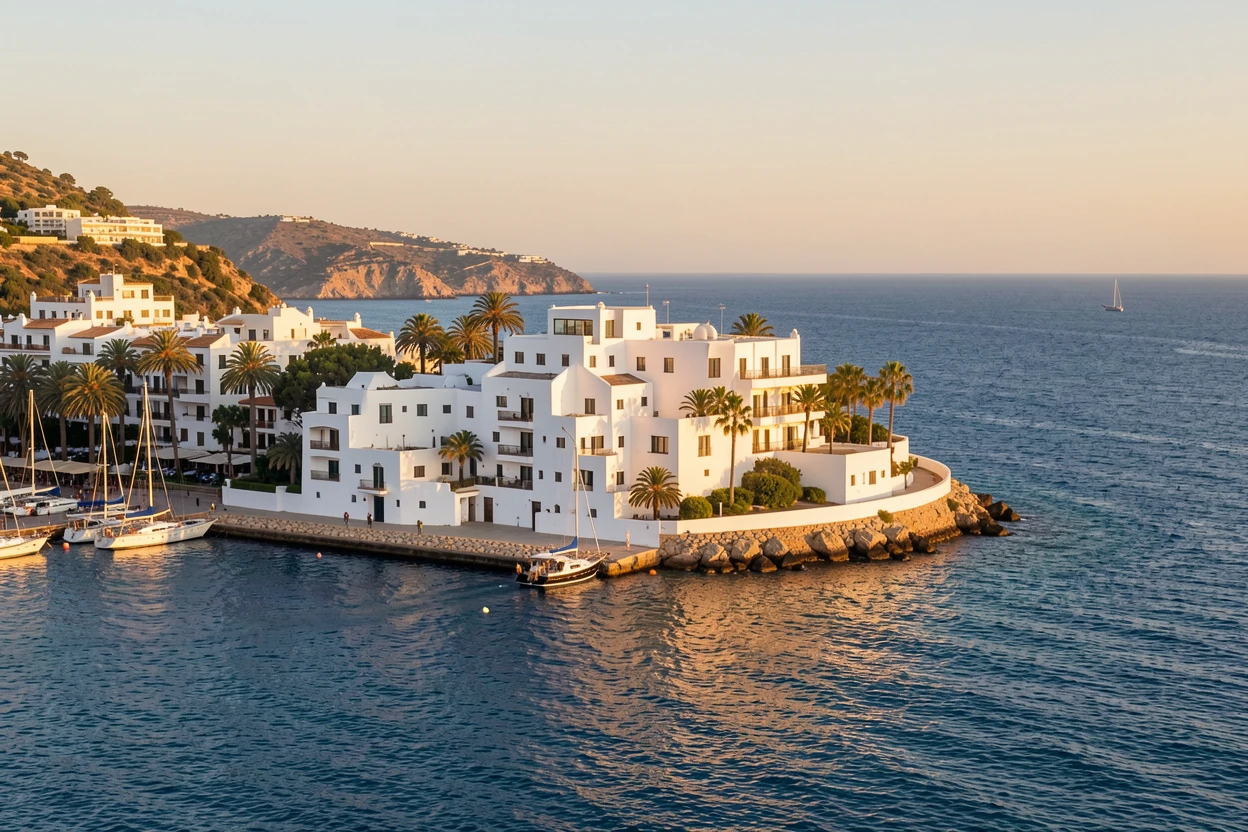
Three towns in one — a pretty pueblo, a busy beachfront and the playful Puerto Marina — plus a mountain cable car and a fairy-tale castle. A varied, family-friendly stop close to Málaga airport.
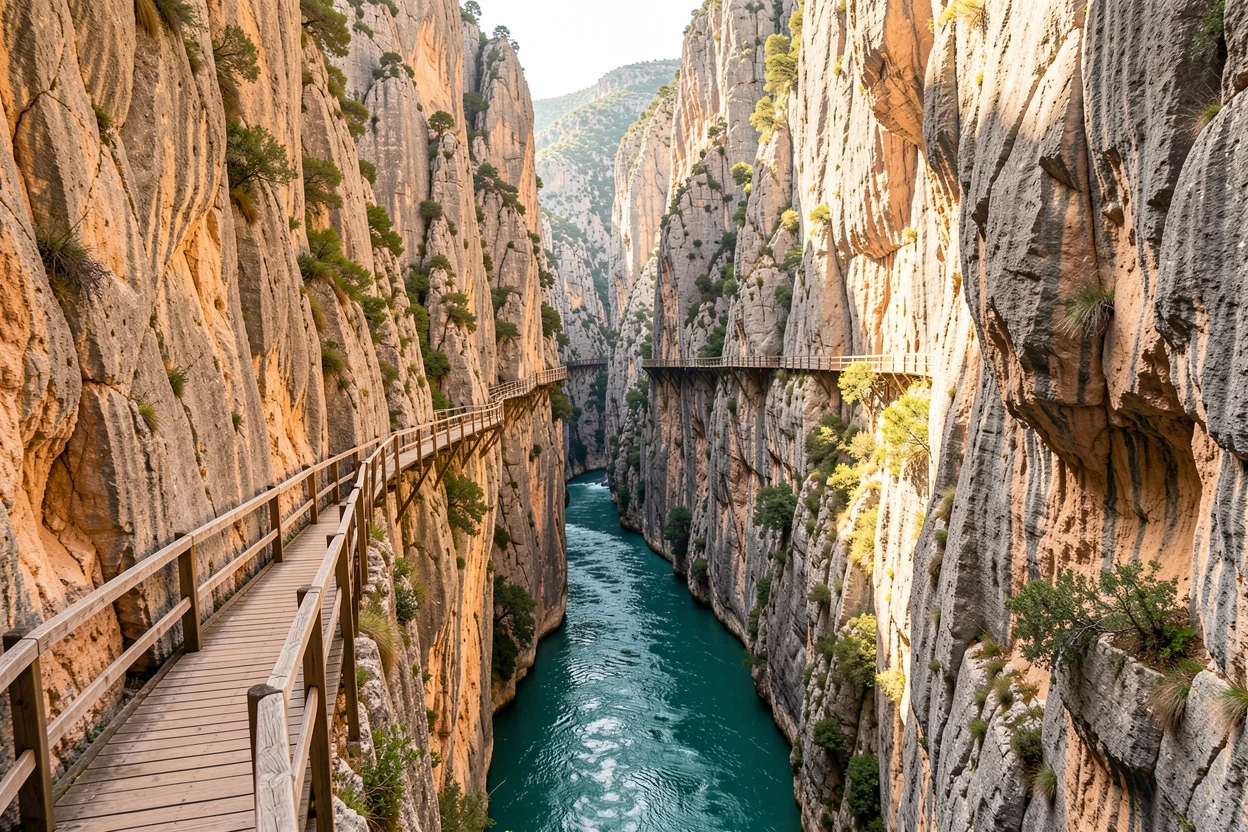
The famous cliff-hung walkway through the Gaitanes gorge is a one-way, two-entrance affair in the middle of nowhere — which makes a car by far the easiest way to do it, and turns the trip into a full lake-and-mountain day out.
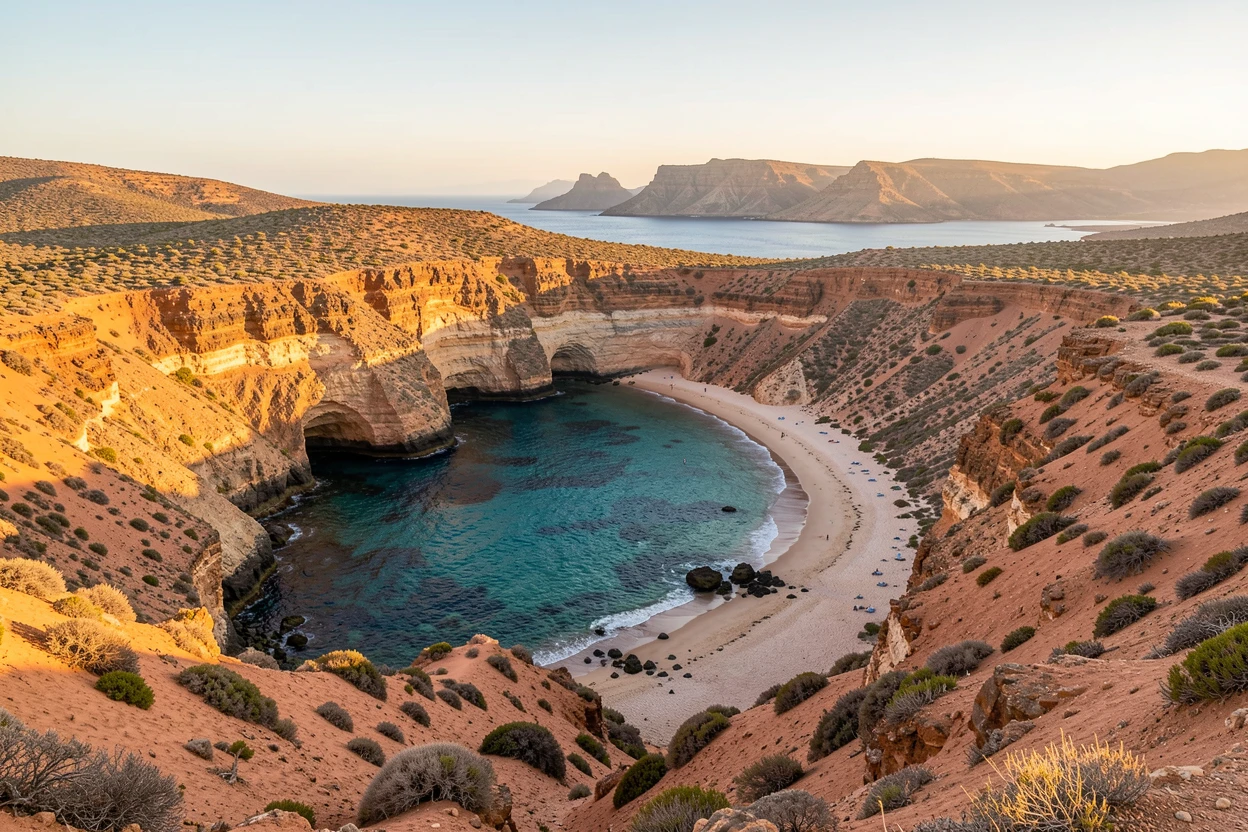
Volcanic headlands, empty coves and whitewashed fishing villages in Spain's driest corner. Public transport barely exists inside the park — Cabo de Gata is the definition of a road-trip destination.