Tarifa by car: wind, wild beaches and views of Africa
Europe's southernmost town: a whitewashed old quarter staring across the Strait at Morocco, backed by kilometres of wild Atlantic sand. Public transport is thin — this is car country.
- Stand at the southernmost point of continental Europe, Africa 14 km away
- Kitesurfing capital of Europe on the beaches of Los Lances and Valdevaqueros
- Bolonia's giant dune and the Roman ruins of Baelo Claudia
- A walled old town of narrow lanes, Guzmán castle and Moorish gates
- Whale- and dolphin-watching boats out into the Strait
- The Mirador del Estrecho viewpoint on the drive in from Algeciras
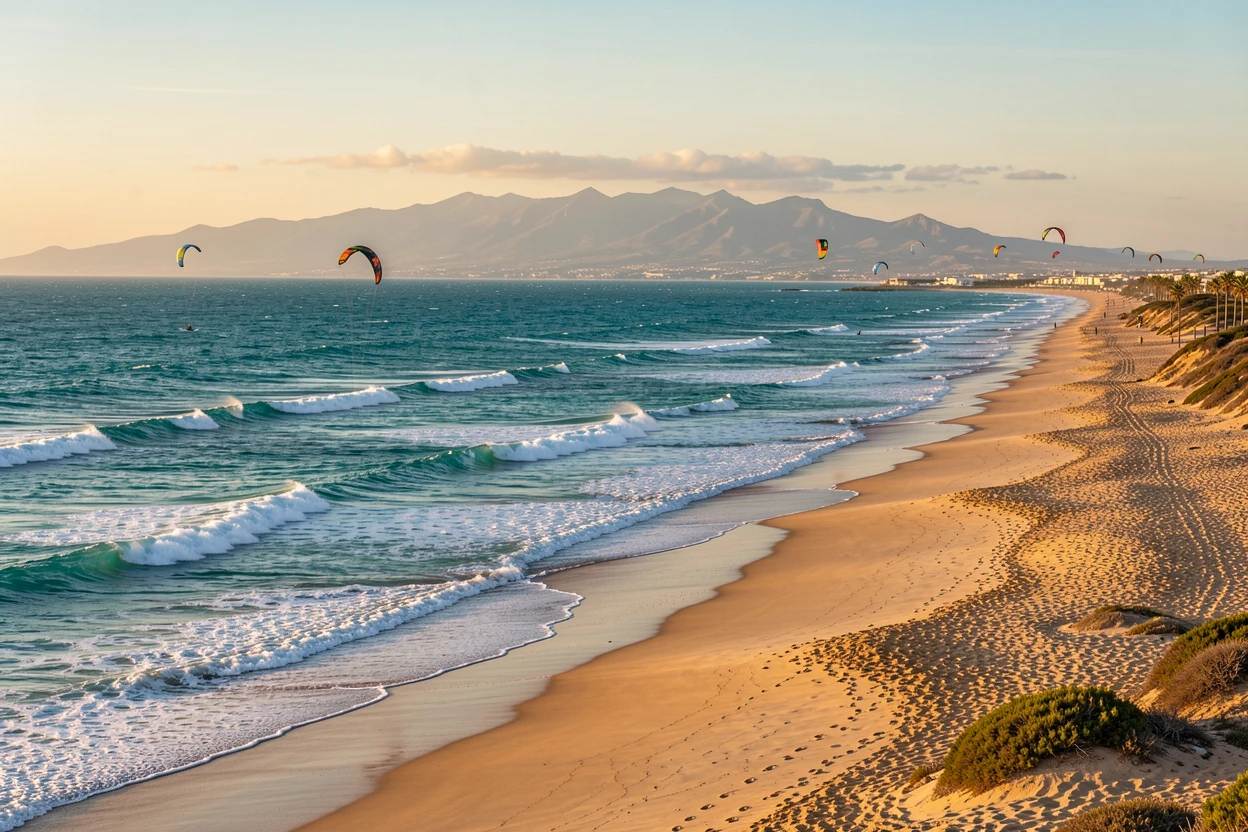
Getting to Tarifa by car
From Málaga airport it's about 165 km and two hours: follow the A-7 or the faster AP-7 toll road west past Marbella, Estepona and Sotogrande to Algeciras, then pick up the N-340 for the final climb over the hills to Tarifa. That last stretch is one of Andalucía's great short drives — stop at the Mirador del Estrecho viewpoint, where the Strait of Gibraltar opens up below you and the Rif mountains of Morocco fill the horizon, just 14 km away. Two cautions: watch for strong crosswind gusts on the exposed sections, and keep an eye out for free-roaming cattle near the road.
Where to park
Tarifa is refreshingly easy by local standards. Skip the walled old town — its lanes are barely a car wide — and use the big open lots between the port and the seafront, most of them free, all within a few minutes' walk of the Puerta de Jerez gate. In July and August arrive early or be patient at midday. The beaches have their own parking: a long lot behind Los Lances, pine-shaded areas at Valdevaqueros, and a car park above the sand at Bolonia. In summer the Bolonia and Valdevaqueros lots fill on weekends, so morning arrivals win.
The old town and the end of Europe
Enter through the Puerta de Jerez and Tarifa's old quarter unfolds as a knot of whitewashed lanes, tiled patios and surf-shop-meets-tapas energy that feels half Andalusian, half Moroccan. The castle of Guzmán el Bueno guards the harbour as it has for a thousand years. From the port, walk the causeway towards Isla de las Palomas: the midpoint is the southernmost tip of continental Europe, with the Mediterranean on your left hand and the Atlantic on your right. Whale-watching boats leave the harbour in season to look for dolphins, pilot whales and — in mid-summer — orcas in the Strait.
Wind, kitesurfing and when to come
Wind is Tarifa's weather, its economy and its calendar. The easterly levante and westerly poniente take turns funnelling through the Strait, which is why this is Europe's kitesurfing and windsurfing capital. Spring and autumn are the sweet spot: warm, bright, room on the sand and plenty of wind for the kiters. High summer brings the crowds and often the strongest levante days — thrilling to watch, less fun for a picnic. If you want still, swimmable days, watch the forecast and aim for poniente or the calm windows between blows. Winter is mild, green and wonderfully empty.
Beach-hopping by car
The car is what unlocks Tarifa's real treasure: 10 km and more of wild Atlantic beaches running north-west of town. Los Lances is the closest — a huge sweep of white sand backed by a lagoon. Further on, Valdevaqueros is kitesurf central, with beach bars and the great dune of Punta Paloma pouring into the sea. Over the headland, Bolonia is the showstopper: a horseshoe bay with its own giant dune and the remarkably complete Roman town of Baelo Claudia — theatre, forum, fish-salting factory — right behind the beach. None of these are practical without your own wheels.
Day trips and combinations
Tarifa anchors the far end of a superb coastal run from the Costa del Sol, so build it into a bigger day or a two-day loop. Gibraltar and its Rock are 45 minutes back east. North along the Atlantic, Zahara de los Atunes has more magnificent sand, and hilltop Vejer de la Frontera is one of Andalucía's most beautiful white towns, about 50 minutes away. Ferries cross from Tarifa's port to Tangier in under an hour if Morocco tempts you — check your rental agreement before even thinking of taking the car. Heading home, the run back past Estepona to Marbella closes the loop nicely.
Making a day of it from the Costa del Sol
Tarifa rewards an early start. Leave Marbella or Málaga in the morning cool, stop at the Mirador del Estrecho for that first big view of Africa, and be walking through the Puerta de Jerez before the heat builds. Give the old town and the castle the morning, lunch in the lanes, then drive out to Bolonia for the afternoon — ruins first, beach after, and the climb up the dune as the light softens across the Strait. If the levante is blowing hard that day, flip the plan: the sheltered old-town lanes are far more pleasant than a sand-blasted picnic, and watching the kitesurfers fly at Valdevaqueros is a spectacle in itself. A few practical notes: hold on to your car doors when opening them in a strong gust — the wind here means it; brush the sand off before it moves into the car for good; and fill up in Algeciras or Tarifa itself before beach-hopping, as stations get sparse along the wild stretch of coast. Driving home in the evening, the N-340 back over the hills serves up the Strait views all over again, this time with the sun behind you.
Rent a car for Tarifa
Best explored by car. Compact automatic from €28/day — or pick any class.
Parking
Don't drive into the walled old town — its lanes are barely car-width. Use the large lots by the port and along the seafront, mostly free; Los Lances, Valdevaqueros and Bolonia have their own beach car parks.
Nearest pickup
Málaga Airport — 165 km
Routes through Tarifa
More places worth the drive
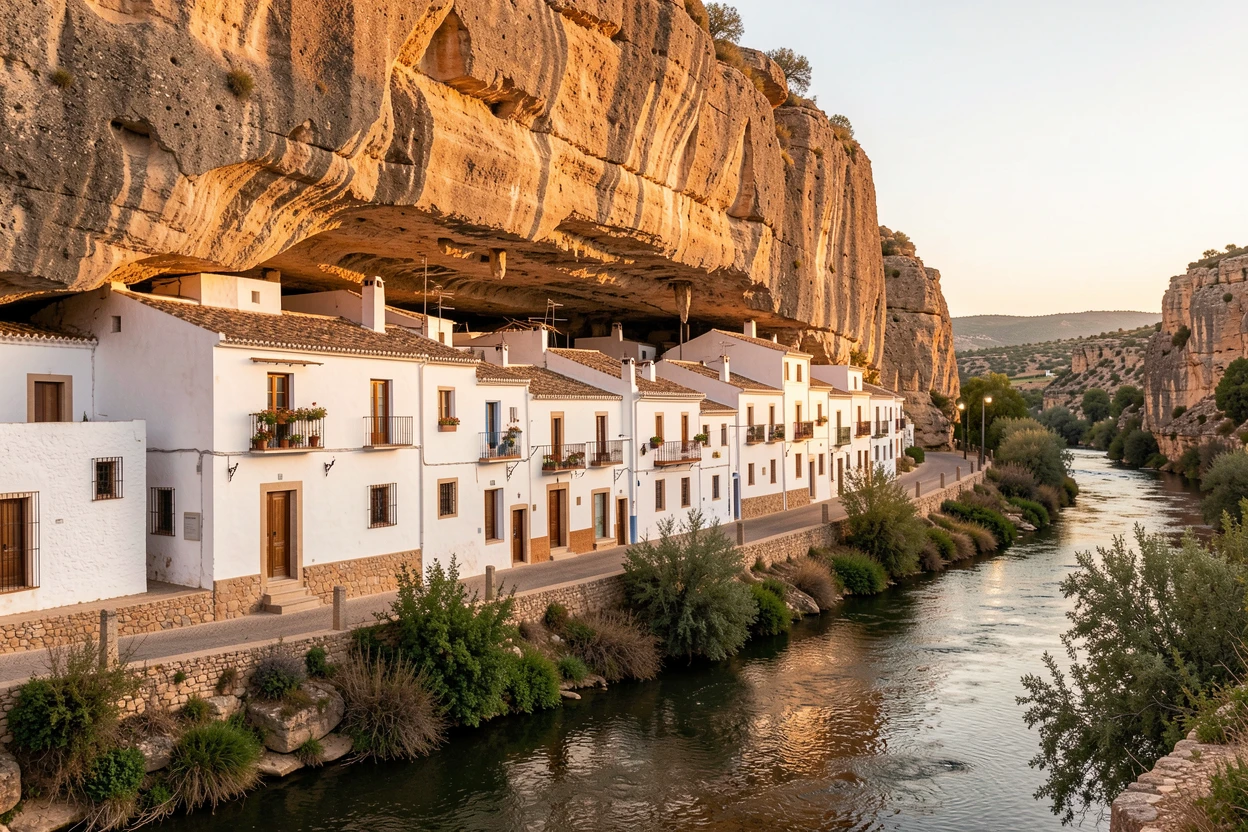
A white village literally built into a rock gorge — houses roofed by cliff, tapas bars in the shade of the overhang. Reachable only sensibly by car, and best combined with Ronda.
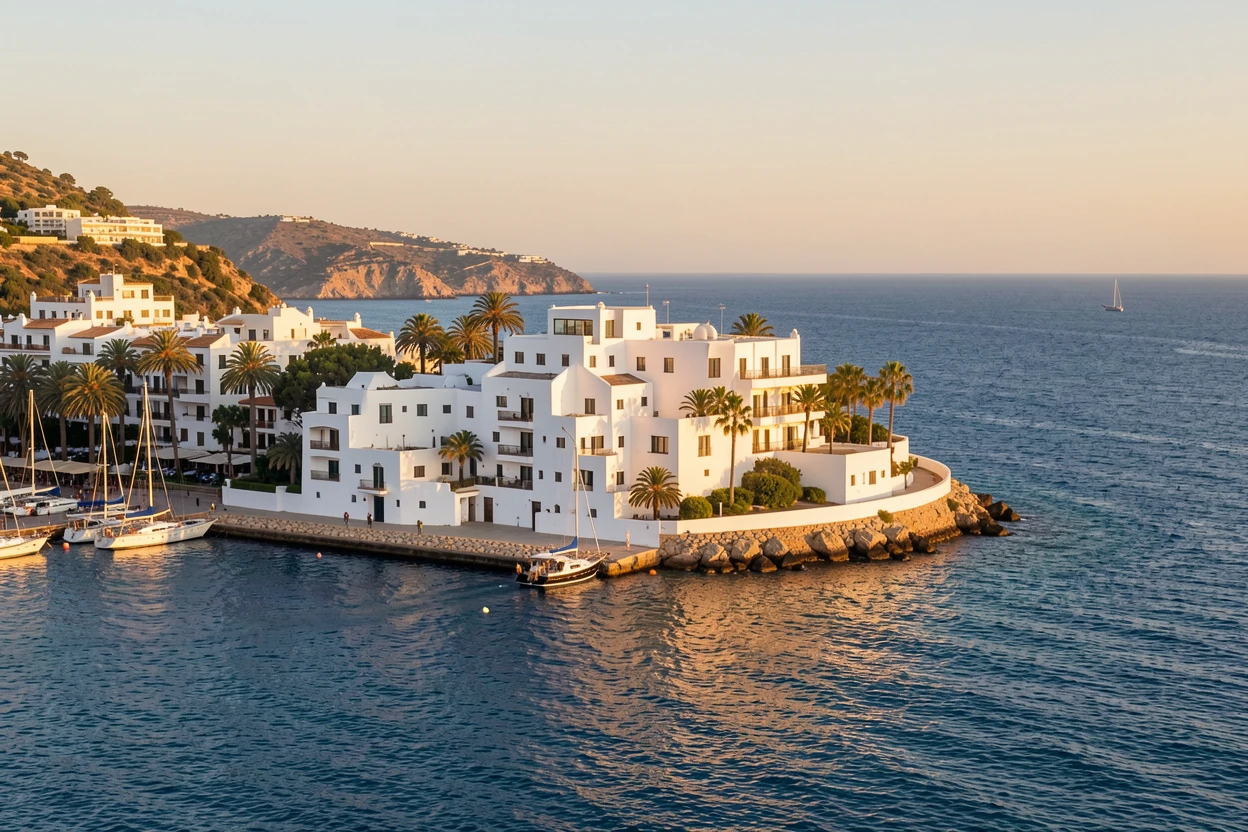
Three towns in one — a pretty pueblo, a busy beachfront and the playful Puerto Marina — plus a mountain cable car and a fairy-tale castle. A varied, family-friendly stop close to Málaga airport.
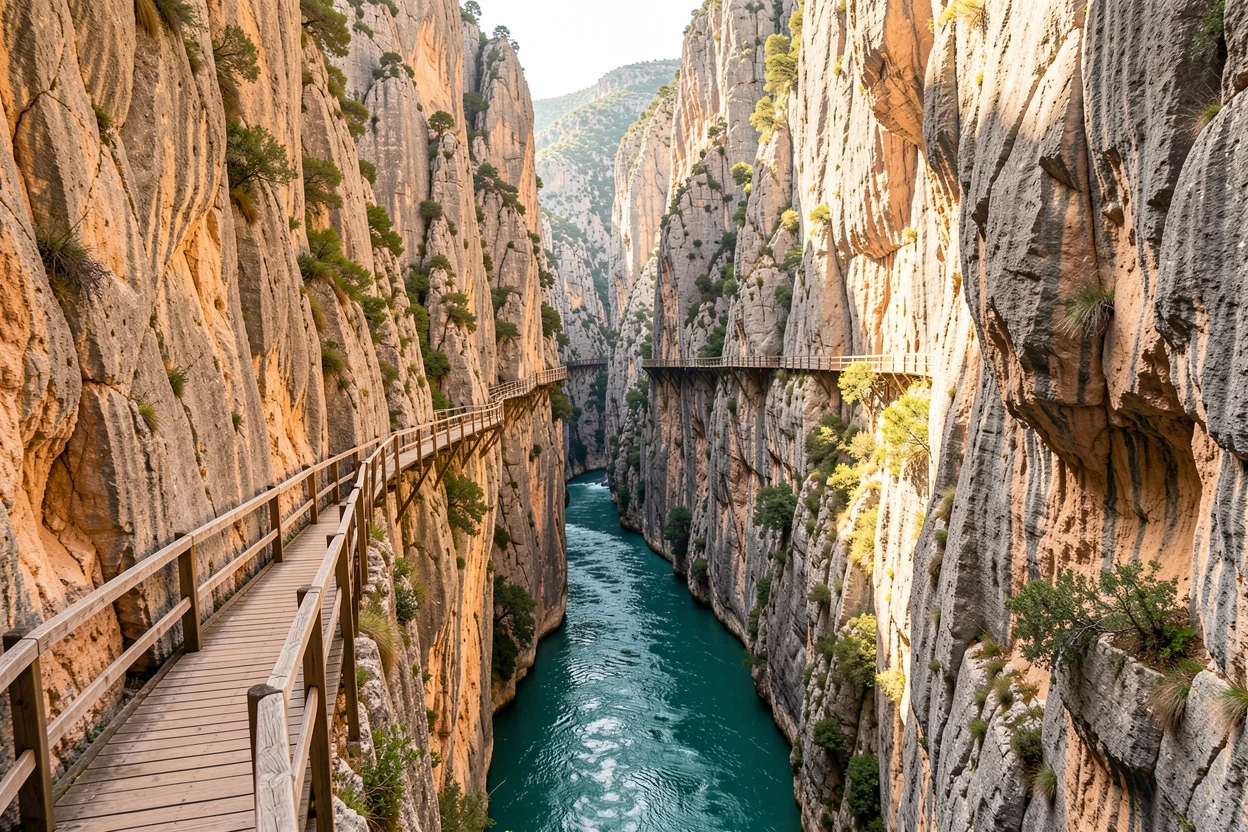
The famous cliff-hung walkway through the Gaitanes gorge is a one-way, two-entrance affair in the middle of nowhere — which makes a car by far the easiest way to do it, and turns the trip into a full lake-and-mountain day out.